
Understanding Gender-Based Violence
Gender-based violence (GBV) is neither marginal nor exceptional. It affects societies, generations and different environments, including those associated with celebration, culture and collective gatherings.
Recognizing, naming and understanding the legal framework governing these forms of violence is an essential step towards taking responsible and informed action.
This document aims to establish a shared foundation of understanding by presenting the main definitions of gender-based violence, Morocco’s international commitments, and the national legal texts that currently structure the prevention of and response to such violence.
What Does Gender-Based Violence Include?
An Internationally Recognized Definition
According to the United Nations Declaration on the Elimination of Violence against Women, gender-based violence refers to any act of violence directed against a person on the basis of their gender that may result in physical, sexual, psychological or economic harm (United Nations General Assembly, 1993). 1
The World Health Organization defines violence as “the intentional use of physical force or power, threatened or actual,” highlighting that it can result in lasting trauma, whether visible or invisible (WHO, 2002). 2
These definitions highlight an essential reality:
Gender as a Structuring Factor in Violence
Gender refers to socially constructed roles and norms that assign different behaviours, expectations and positions to women, men and people whose gender identity does not conform to dominant norms. 3
The study conducted by the AMANE Association 4 highlights how these norms are established from childhood and contribute to the normalization of certain forms of violence, particularly against girls and women.
Gender-based violence therefore cannot be understood solely as the result of individual behaviour. It is also rooted in broader social and cultural dynamics.
A Binding International Legal Framework
Morocco’s International Commitments
Morocco has ratified several major international conventions addressing gender-based violence, including:
- the Convention on the Elimination of All Forms of Discrimination against Women (CEDAW),
- the Convention on the Rights of the Child,
- the United Nations Declaration on the Elimination of Violence against Women.
These instruments recognize the fundamental right to physical and moral integrity, as well as the responsibility of States to prevent violence, protect victims and prosecute perpetrators.
The Moroccan Constitution of 2011 establishes the primacy of duly ratified international conventions over domestic legislation, while also affirming equality between women and men and the right to dignity.
Responsibilities That Extend Beyond the State
International standards emphasize that addressing gender-based violence is not solely the responsibility of public institutions.
It is a shared responsibility that also involves civil society organizations, cultural actors and organizations that operate public-facing spaces.
This approach recognizes that prevention also requires information, awareness-raising, staff training, listening and referral mechanisms, as well as environments where people feel safe reporting a situation or seeking help.
It also encourages the development of clear protocols, appropriate support mechanisms and a culture of care and collective responsibility, in order to prevent violence before it occurs and ensure a coordinated response when it does.
The Moroccan Legal Framework
The Constitution as a Foundation
Adopted in 2011, the Moroccan Constitution 5 represents an important development in the protection of rights and freedoms:
- l’article 19 affirme l’égalité entre les sexes,
- Article 22 protects physical and moral integrity,
- Article 32 guarantees equal legal protection for all children, without distinction.
It also provides for the creation of institutional mechanisms dedicated to combating discrimination.
Law No. 103-13: Progress and Limitations
Law No. 103-13 on combating violence against women, adopted in 2018, represents an important step in the legal recognition of gender-based violence in Morocco.
It notably introduced:
– the criminalization of certain forms of harassment,
– recognition of digital forms of violence,
– the institutionalization of support units within the courts.
However, the law has also been subject to criticism, particularly regarding the insufficiency of immediate protection measures for victims and its partial alignment with international standards.
A Still Fragmented Legal Framework
Other legal instruments also contribute to addressing gender-based violence, including:
– legislation against human trafficking,
– the Criminal Code and the Code of Criminal Procedure,
– the Family Code.
The AMANE study nevertheless highlights the absence of a unified legal framework and the difficulties involved in effectively implementing existing laws as major obstacles to ensuring effective protection for victims.
Public Spaces, Cultural Events and Responsibility
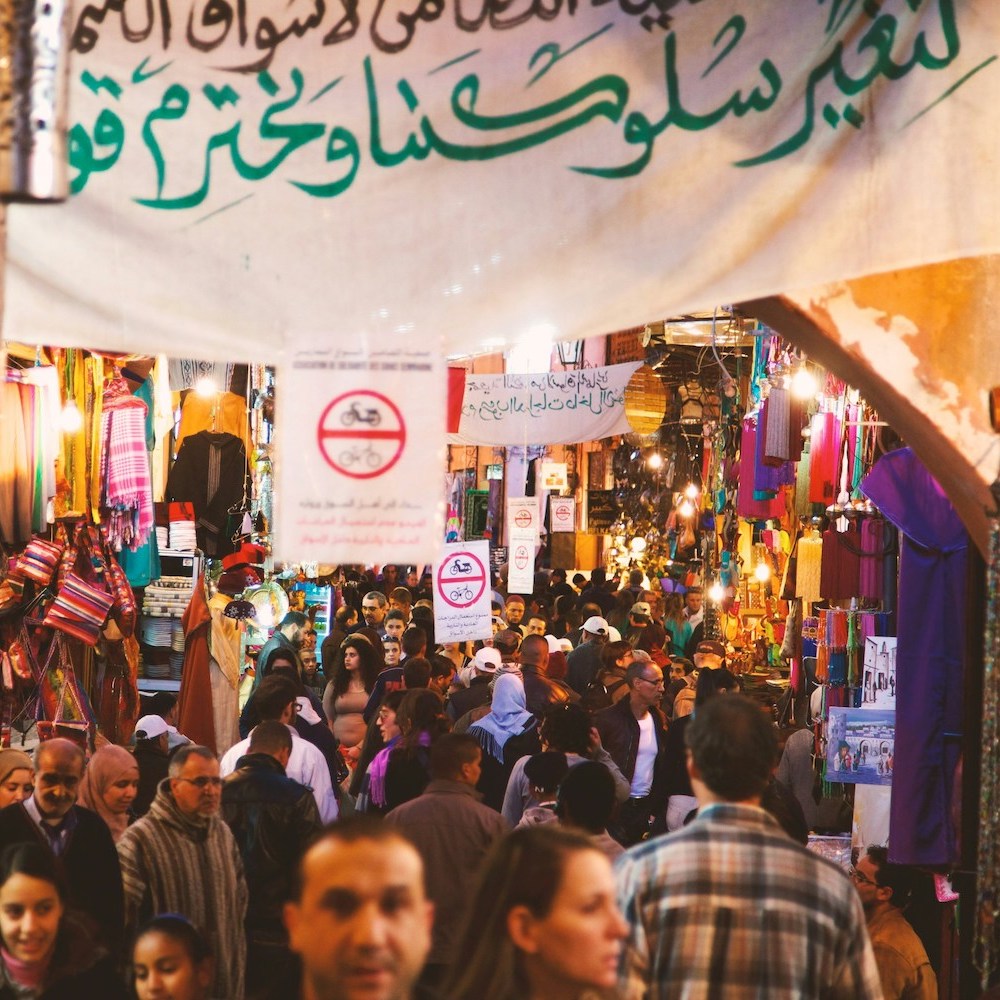
Festivals and cultural events are temporary public spaces characterized by density, diversity and specific dynamics linked, among other factors, to nightlife, crowds, fatigue, the intensity of the festive experience.
These characteristics can increase the risk of gender-based violence.
Without replacing judicial or medical institutions, event organizers have an important role to play in:
– prevention,
– information,
– referral to existing support services,
– creating an environment of trust.

Conclusion
The legal framework addressing gender-based violence in Morocco is based on strong international commitments and national legislation that continues to evolve.
While significant progress has been made, important challenges remain, particularly regarding implementation, prevention and access to information.
In this context, initiatives such as Souk Rassek serve as complementary tools, helping translate legal principles into concrete practices adapted to the realities of cultural and festive environments.
Bibliography
1 – United Nations General Assembly. (1993). Declaration on the Elimination of Violence against Women.
2 – World Health Organization. (2002). World Health Organization.World report on violence and health
3 – UN Women. (2017). United Nations Entity for Gender Equality and the Empowerment of Women. Glossaire pour l’égalité des sexes.
4 – AMANE – Association Meilleur Avenir pour Nos Enfants. (2022). Rabat, Morocco.Gender-Based Violence Against Girls and Boys in Morocco.
5 – Kingdom of Morocco. (2011). General Secretariat of the Government. Constitution of the Kingdom of Morocco. (articles 19, 22 et 32, pp. 8–10)
United Nations. (1979). Convention on the Elimination of All Forms of Discrimination against Women (CEDAW).
United Nations. (1989). Convention on the Rights of the Child.
UN Women. (2020). United Nations Entity for Gender Equality and the Empowerment of Women. COVID-19 and ending violence against women and girls.
World Health Organization. (2010). World Health Organization.Preventing intimate partner and sexual violence against women: Taking action and generating evidence.
Kingdom of Morocco. (2018). General Secretariat of the Government. Law No. 103-13 on Combating Violence Against Women.
Kingdom of Morocco. (n.d.). Ministry of Justice. Moroccan Criminal Code.
Kingdom of Morocco. (n.d.). Ministry of Justice. Moroccan Code of Criminal Procedure.
Kingdom of Morocco. (2016). Ministry of Justice. Family Code (Moudawana).